UAE
Burj Khalifa Dot to Dot — Free 60-Dot Printable for Ages 5–8
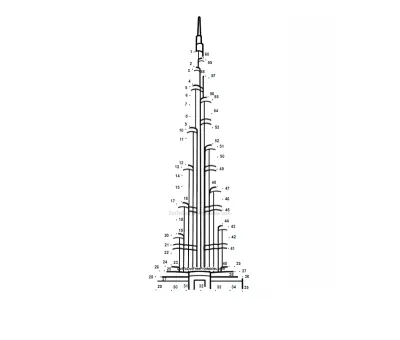
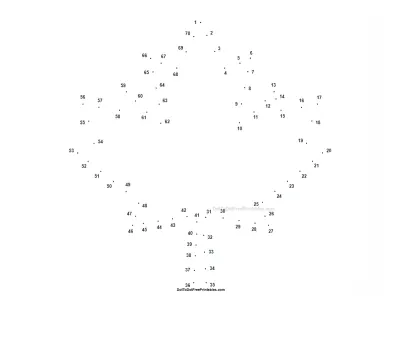
Connect 60 dots to reveal the Burj Khalifa, the record-breaking skyscraper that soars above the city of Dubai. This puzzle is a good fit for children practising number sequencing while discovering the tallest building on Earth.
Difficulty
Medium
Fun fact: The Burj Khalifa is the tallest building in the world, standing over 828 metres (2,717 feet) tall!
Downloaded0+timesYou’ve made a great choice!
Downloads now start from the button below. Tap it to get this puzzle's PDF.
Number Version
Connect the numbered dots from 1 to the end to reveal the picture.
Free for home and classroom use.
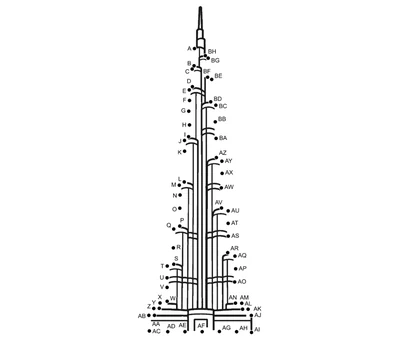
Alphabet Version
Includes alphabet-themed design for easy learning.
No sign-up needed. Opens as a PDF. Print on US Letter (8.5 × 11 inch) or A4 paper. Free for home and classroom use.
UAE
You might also like
Ages 5–8 — Medium
How to Solve the Burj Khalifa Dot-to-Dot Puzzle
The Burj Khalifa is the tallest building ever built by human hands — a needle-like tower that pierces the sky above Dubai. Its tiered, spiralling design was inspired by a desert flower called the Hymenocallis, and it has held the title of the world's tallest building since it opened in 2010. This 60-dot puzzle traces its soaring silhouette from base to spire. Find dot 1 and let's reach for the sky!
1–12 — The Spire
Start at dot 1 and connect through to dot 12 to trace the thin, pointed spire at the very top of the tower. This narrow section builds careful, controlled pencil strokes right from the start — a great warm-up before the wider shapes below. Encourage children to draw slowly and keep the lines straight and tall.
Fun fact!
The spire alone is about 244 metres (800 feet) tall — nearly as tall as some entire skyscrapers in other cities! It contains a telecommunications antenna and is one of the reasons the Burj Khalifa holds so many height records. See the full height records on CTBUH's Skyscraper Center entry for Burj Khalifa.
The spire alone is about 244 metres (800 feet) tall — nearly as tall as some entire skyscrapers in other cities! It contains a telecommunications antenna and is one of the reasons the Burj Khalifa holds so many height records. See the full height records on CTBUH's Skyscraper Center entry for Burj Khalifa.
13–24 — The Upper Tiers
Continue from dot 13 to dot 24 to draw the narrowing, stepped sections near the top of the tower. Children practise drawing a shape that gradually gets smaller as it rises, which is a wonderful way to talk about perspective and how buildings can taper toward the sky.
Fun fact!
The building has 163 floors — more than any other building in the world at the time it was completed. It also has an observation deck, called 'At the Top,' on the 148th floor.
The building has 163 floors — more than any other building in the world at the time it was completed. It also has an observation deck, called 'At the Top,' on the 148th floor.
25–36 — The Middle Spiral
Trace dots 25 through 36 to draw the middle section, where the tower's spiralling, tiered pattern is easiest to see. This section rewards careful attention as the setbacks and angles change direction several times, giving children great practice following a more complex outline.
Fun fact!
The Burj Khalifa's design is inspired by the Hymenocallis, a desert flower with long, slender petals that spiral outward from the centre. Architects used this natural shape to help the building withstand strong desert winds.
The Burj Khalifa's design is inspired by the Hymenocallis, a desert flower with long, slender petals that spiral outward from the centre. Architects used this natural shape to help the building withstand strong desert winds.
37–48 — The Lower Tower
Connect dots 37 to 48 to fill in the broader lower section of the tower. This is one of the larger sections of the puzzle, helping children build focus and patience as the tower's full height starts to take shape on the page.
Fun fact!
Building the Burj Khalifa took a huge amount of concrete and steel rebar, laid down floor by floor as the tower rose higher and higher!
Building the Burj Khalifa took a huge amount of concrete and steel rebar, laid down floor by floor as the tower rose higher and higher!
49–60 — The Base
Finish the puzzle by connecting dots 49 through 60 to draw the wide base of the tower where it meets the ground. Just twelve dots to the finish line — encourage children to complete the outline with strong, confident final lines.
Fun fact!
The Burj Khalifa sits in the middle of Downtown Dubai, surrounded by a large man-made lake with the Dubai Fountain, famous for its choreographed water shows set to music and lights every evening.
The Burj Khalifa sits in the middle of Downtown Dubai, surrounded by a large man-made lake with the Dubai Fountain, famous for its choreographed water shows set to music and lights every evening.
Amazing — your Burj Khalifa is complete! Now give it a glimmering silver, gold, or sunset colour scheme to match the tower's famous evening light shows. Ready for another famous landmark? Explore more UAE dot to dot printables to keep the fun going.
Coloring Guide
Burj Khalifa: Classic Real-Life Colors
Everyday colours for the world's tallest tower — the silvery glass-and-steel skin it shows by day and the blue Dubai sky its tip disappears into.
| Dot Range | Part | Color | Why this color | |
|---|---|---|---|---|
| Numeric | Alphabet | |||
| 1–12 | A–L | The Spire | Crayola Scarlet | The needle-thin spire adds about 244 metres of height and hides a broadcast antenna; draw it tall and straight. |
| 13–24 | M–X | The Upper Tiers | Crayola Sky Blue | These stepped setbacks near the top keep narrowing as the tower rises, a good place to show a shape tapering into the sky. |
| 25–36 | Y–AJ | The Middle Spiral | Crayola Goldenrod | Here the Y-shaped plan spirals inward in stages, the pattern borrowed from the Hymenocallis desert flower. |
| 37–48 | AK–AV | The Lower Tower | Crayola Scarlet | The wide lower shaft carries most of the building's 163 floors and the bulk of its colour. |
| 49–60 | AW–BH | The Base | Crayola Sky Blue | The tower spreads out where it meets Downtown Dubai and the fountain lake, so end with a firm, grounded line. |
Burj Khalifa: Soft Natural Colors
On a bright morning the Burj Khalifa's glass fades to a pale haze and the spire can vanish into the light, the effect this softer set aims for.
| Dot Range | Part | Color | Why this color | |
|---|---|---|---|---|
| Numeric | Alphabet | |||
| 1–12 | A–L | The Spire | Crayola Silver | Against a bright sky the far tip of the spire almost disappears, so keep this a pale, faint grey. |
| 13–24 | M–X | The Upper Tiers | Crayola Tan | Morning light bleaches the upper setbacks to a warm sandy pale. |
| 25–36 | Y–AJ | The Middle Spiral | Crayola Sea Green | Sun on the glass mid-tower gives a soft, hazy green-grey shimmer. |
| 37–48 | AK–AV | The Lower Tower | Crayola Silver | Daylight flattens the lower shaft to a light, even tone with very little shadow. |
| 49–60 | AW–BH | The Base | Crayola Tan | The base and its lake read as a gentle, sunlit pale at midday. |
Burj Khalifa: Bold Real-Life Colors
Every evening the tower runs a huge LED light show down its full height, so this stronger set uses those vivid painted-on colours.
| Dot Range | Part | Color | Why this color | |
|---|---|---|---|---|
| Numeric | Alphabet | |||
| 1–12 | A–L | The Spire | Crayola Forest Green | In the nightly show the spire is often the brightest point, tipped with a saturated colour. |
| 13–24 | M–X | The Upper Tiers | Crayola Brown | The upper setbacks catch bold bands of LED colour after dark. |
| 25–36 | Y–AJ | The Middle Spiral | Crayola Orange | The spiralling midsection is where the light-show patterns ripple most, so use a strong hue. |
| 37–48 | AK–AV | The Lower Tower | Crayola Forest Green | The tall lower shaft carries the deepest, most solid block of show colour. |
| 49–60 | AW–BH | The Base | Crayola Brown | Floodlights and the dancing fountain give the base a rich, dramatic tone at night. |
Why Is the Burj Khalifa Dot to Dot Printable Rated Medium?
The Burj Khalifa is rated medium. Its 60 dots split into 24 straight, 3 curved, 24 zigzag and 9 sharp-turn dots — the direction changes are what lift it above an easy outline. The stretches to slow down for are middle spiral at dots 25–29 and lower tower at dots 38–40. Follow the numbered order even when another dot looks nearer, and check the next number before each turn.
Straight
24 dots · 40%
Easiest — join two dots with one straight pencil stroke.
Curved
3 dots · 5%
36 37
Zigzag
24 dots · 40%
55 59
Sharp turns
9 dots · 15%
25 29
We traced all 60 dots on this exact worksheet by hand — the sharp turns at dots 25–29 is where it got tricky, and you can check that against your own printout.
Key Sections to Know
Every notable stretch of the path, dot by dot.
| Dot Range | Pattern | Why It Matters | |
|---|---|---|---|
| Numeric | Alphabet | ||
| 3 5 | C E | Zigzag | Dots 3–5 zigzag across spire; the direction flips each dot, so join one pair at a time. |
| 25 29 | Y AC | Sharp turns | Dots 25–29 cut a sharp corner at middle spiral; lift your eyes to dot 29 before drawing it. |
| 36 37 | AJ AK | Curved | The outline swings around middle spiral here; take dots 36 to 37 in short strokes. |
| 38 40 | AL AN | Sharp turns | There is a tight angle at lower tower here; treat dots 38 and 40 as two separate short lines. |
| 55 59 | BC BG | Zigzag | Dots 55–59 zigzag across base; the direction flips each dot, so join one pair at a time. |
Bottom line: The Burj Khalifa dot to dot is medium rated — 45% smooth lines with just 4 short sections to watch for.