Cute
Cute Owl Dot to Dot — Free 65-Dot Printable for Ages 5–8
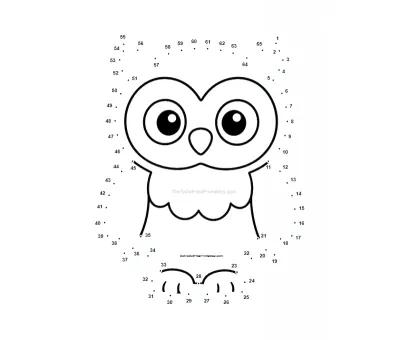
Connect 65 dots to reveal an adorable owl. This medium printable puzzle helps children practise number sequencing, pencil control, and concentration.
Difficulty
Medium
Fun fact: Owls can rotate their heads up to 270 degrees — almost all the way around! They do this because, unlike humans, their eyes are fixed in place and can't move within their sockets.
Downloaded9+timesYou’ve made a great choice!
Downloads now start from the button below. Tap it to get this puzzle's PDF.
Number Version
Connect the numbered dots from 1 to the end to reveal the picture.
Free for home and classroom use.
Alphabet Version
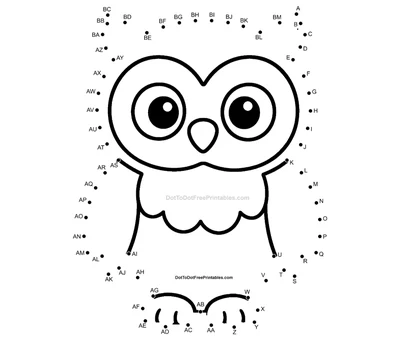
Includes alphabet-themed design for easy learning.
No sign-up needed. Opens as a PDF. Print on US Letter (8.5 × 11 inch) or A4 paper. Free for home and classroom use.
Cute
You might also like
Ages 5–8 — Medium
How to Solve the Cute Owl Dot-to-Dot Puzzle
Whooo's ready to draw a new friend? With its big round eyes, fluffy feathers, and pointed ear tufts, this wide-eyed owl is one of the most fun animals to bring to life dot by dot. This 65-dot puzzle builds the owl up section by section, so grab a pencil, find a cosy spot, and let this little night watcher perch on your page!
1–16 — The Big Round Eyes
Start at dot 1 and work through to dot 16 to draw the owl's two big, round eyes. Circles are wonderful for warming up a steady hand — encourage children to go slowly and keep each curve smooth rather than rushing.
Fun fact!
An owl's eyes are so large that they take up nearly the entire size of its skull. In fact, an owl's eyes are so big that they can't roll them at all — that's exactly why they need to turn their whole head to look around.
An owl's eyes are so large that they take up nearly the entire size of its skull. In fact, an owl's eyes are so big that they can't roll them at all — that's exactly why they need to turn their whole head to look around.
17–32 — The Head and Ear Tufts
Continue from dot 17 to dot 32 to shape the owl's round head and its two pointed ear tufts. This is the most detailed part of the puzzle, with dots placed close together — a great exercise in patience and precision.
Fun fact!
Those pointy tufts on top of an owl's head aren't ears at all — they're just feathers! An owl's real ears are hidden slits on the sides of its head, and are often positioned at slightly different heights to help it pinpoint sounds.
Those pointy tufts on top of an owl's head aren't ears at all — they're just feathers! An owl's real ears are hidden slits on the sides of its head, and are often positioned at slightly different heights to help it pinpoint sounds.
33–48 — The Feathered Body
Trace dots 33 through 48 to draw the owl's round, fluffy body. The lines here are longer and smoother than in the face section, so encourage one confident stroke per line — a nice change of rhythm after all that careful detail work.
Fun fact!
An owl's feathers have specially soft, fringed edges that muffle the sound of air rushing over its wings. This lets an owl fly almost completely silently, so it can swoop down on its next meal without being heard.
An owl's feathers have specially soft, fringed edges that muffle the sound of air rushing over its wings. This lets an owl fly almost completely silently, so it can swoop down on its next meal without being heard.
49–65 — The Wings and Feet
Finish by connecting dots 49 through 65 to add the folded wings and the little clawed feet gripping a branch. Seventeen dots to the finish line — a smooth, confident finish brings the whole owl to life. Don't forget to add a wise little expression!
Fun fact!
Owls have four toes on each foot, and one of them can swivel backward or forward. This lets an owl grip its perch with two toes in front and two behind for extra balance — and shift that outer toe sideways to widen its grip when catching prey.
Owls have four toes on each foot, and one of them can swivel backward or forward. This lets an owl grip its perch with two toes in front and two behind for extra balance — and shift that outer toe sideways to widen its grip when catching prey.
Terrific work on a 65-dot puzzle! Your owl is ready for a coat of soft browns and greys, or any colour you can dream up. Explore more cute dot to dot printables to keep the fun going.
Coloring Guide
Great Horned Owl
The great horned owl is a real, widespread species with mottled brown feathers, big yellow eyes, and tall feather tufts.
| Dot Range | Part | Color | Why this color | |
|---|---|---|---|---|
| Numeric | Alphabet | |||
| 1–16 | A–P | Big round eyes | Crayola Yellow | Great horned owls have large, bright yellow eyes suited to night hunting. |
| 17–32 | Q–AF | Head and ear tufts | Crayola Brown | This species is known for its tall feather tufts that look like ears. |
| 33–48 | AG–AV | Feathered body | Crayola Brown | Mottled brown feathers help this owl blend into trees during the day. |
| 49–65 | AW–BM | Wings and feet | Crayola Raw Sienna | Wing feathers are often a warmer, reddish-brown shade. |
Snowy Owl
Snowy owls are real Arctic birds, with males growing nearly pure white feathers as they mature.
| Dot Range | Part | Color | Why this color | |
|---|---|---|---|---|
| Numeric | Alphabet | |||
| 1–16 | A–P | Big round eyes | Crayola Yellow | Snowy owls keep the same bright yellow eyes as other owl species. |
| 17–32 | Q–AF | Head and ear tufts | Crayola Silver (outline only) | Snowy owls have rounded heads without the tall ear tufts of some other species. |
| 33–48 | AG–AV | Feathered body | Crayola Silver (outline only) | Adult male snowy owls are almost entirely white, suited to snowy Arctic homes. |
| 49–65 | AW–BM | Wings and feet | Crayola Black | Females and young snowy owls keep small dark markings on their wings. |
Why Is the Cute Owl Dot to Dot Printable Rated Medium?
The Cute Owl is rated medium. Of its 65 dots, 34 run in straight lines, with 9 curved, 13 zigzag and 9 sharp-turn dots. The stretch to slow down for is head and ear tufts at dots 30–32. Follow the numbered order even when another dot looks nearer, and check the next number before each curve.
Straight
34 dots · 52%
Easiest — join two dots with one straight pencil stroke.
Curved
9 dots · 14%
30 32
Zigzag
13 dots · 20%
Quick in-and-out changes of direction. Good counting practice.
Sharp turns
9 dots · 14%
The hardest bits — tight corners where the line doubles back.
We traced all 65 dots on this exact worksheet by hand to write this — not a generic guess.
Key Sections to Know
Every notable stretch of the path, dot by dot.
| Dot Range | Pattern | Why It Matters | |
|---|---|---|---|
| Numeric | Alphabet | ||
| 30 32 | AD AF | Curved | Around head and ear tufts, the line eases through a smooth bend at dots 30–32; keep the pencil moving slowly. |
Bottom line: The Cute Owl dot to dot is medium rated — 66% smooth lines with no tricky spots to watch for.