Cute
Cute Little Car Dot to Dot — Free 55-Dot Printable for Ages 5–7
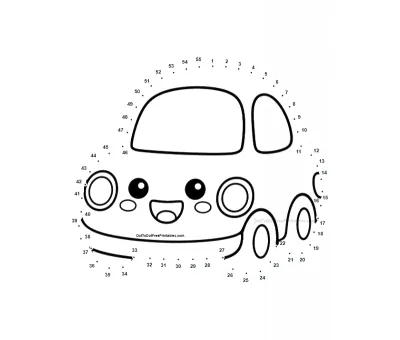
Connect 55 dots to reveal a cheerful little car. This easy printable puzzle helps young learners practise number sequencing, pencil control, and concentration.
Difficulty
Easy
Fun fact: Many small city cars are designed to be easy to park in tight spaces.
Downloaded30+timesYou’ve made a great choice!
Downloads now start from the button below. Tap it to get this puzzle's PDF.
Number Version
Connect the numbered dots from 1 to the end to reveal the picture.
Free for home and classroom use.
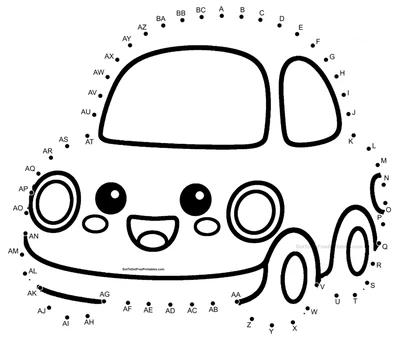
Alphabet Version
Includes alphabet-themed design for easy learning.
No sign-up needed. Opens as a PDF. Print on US Letter (8.5 × 11 inch) or A4 paper. Free for home and classroom use.
Cute
You might also like
Ages 5–7 — Easy

How to Solve the Cute Little Car Dot-to-Dot Puzzle
Vroom vroom! Cars are one of the very first things children learn to spot, name, and draw — and this friendly little car is the perfect starter vehicle. With 55 dots building it up piece by piece, young drivers get to discover how a car is really put together. Buckle up, grab a pencil, and let's hit the road!
1–14 — The Body and Bonnet
Start at dot 1 and connect through to dot 14 to draw the car's rounded body and front bonnet. These are long, gentle curves, perfect for warming up the drawing hand — encourage one smooth stroke per line rather than lots of little scratches.
Fun fact!
Early cars were called 'horseless carriages' because they really were carriages built for horses, just with an engine bolted on. It took years before anyone designed a body made specifically for a motor car.
Early cars were called 'horseless carriages' because they really were carriages built for horses, just with an engine bolted on. It took years before anyone designed a body made specifically for a motor car.
15–28 — The Roof and Windows
Continue from dot 15 to dot 28 to add the rounded roof and the windows. Windows mean corners, and corners are great practice — remind children to pause at each dot, change direction deliberately, and keep going.
Fun fact!
Car windscreens are made from special laminated safety glass: two layers of glass with a thin plastic sheet in between, so if it ever cracks, the pieces stay stuck together instead of scattering.
Car windscreens are made from special laminated safety glass: two layers of glass with a thin plastic sheet in between, so if it ever cracks, the pieces stay stuck together instead of scattering.
29–42 — The Wheels
Trace dots 29 through 42 to draw the two round wheels that make the whole car go. Circles are the trickiest shapes in any dot to dot, so slow right down here — steady, even strokes will make the wheels look truly round.
Fun fact!
The wheel is over 5,000 years old, but the rubber air-filled tyre is much newer — it was invented in 1888, and its cushion of air is why modern car rides feel smooth instead of bone-rattling.
The wheel is over 5,000 years old, but the rubber air-filled tyre is much newer — it was invented in 1888, and its cushion of air is why modern car rides feel smooth instead of bone-rattling.
43–55 — The Lights and Finishing Details
Finish by connecting dots 43 through 55 to add the headlights, bumper, and final details that give the car its friendly face. Thirteen dots to the finish line — a careful, confident end makes the whole picture shine.
Fun fact!
Designers often talk about a car's 'face' — headlights for eyes and a grille for a mouth. Many people say they can see a friendly or fierce expression in a car's front end, which is why small city cars are often given big, round, happy headlights.
Designers often talk about a car's 'face' — headlights for eyes and a grille for a mouth. Many people say they can see a friendly or fierce expression in a car's front end, which is why small city cars are often given big, round, happy headlights.
Fantastic driving — 55 dots, all connected! Your little car is ready for a colourful paint job: racing red, sunny yellow, or any colour you can dream up. Where will it drive first? Explore more cute dot to dot printables to keep the fun going.
Coloring Guide
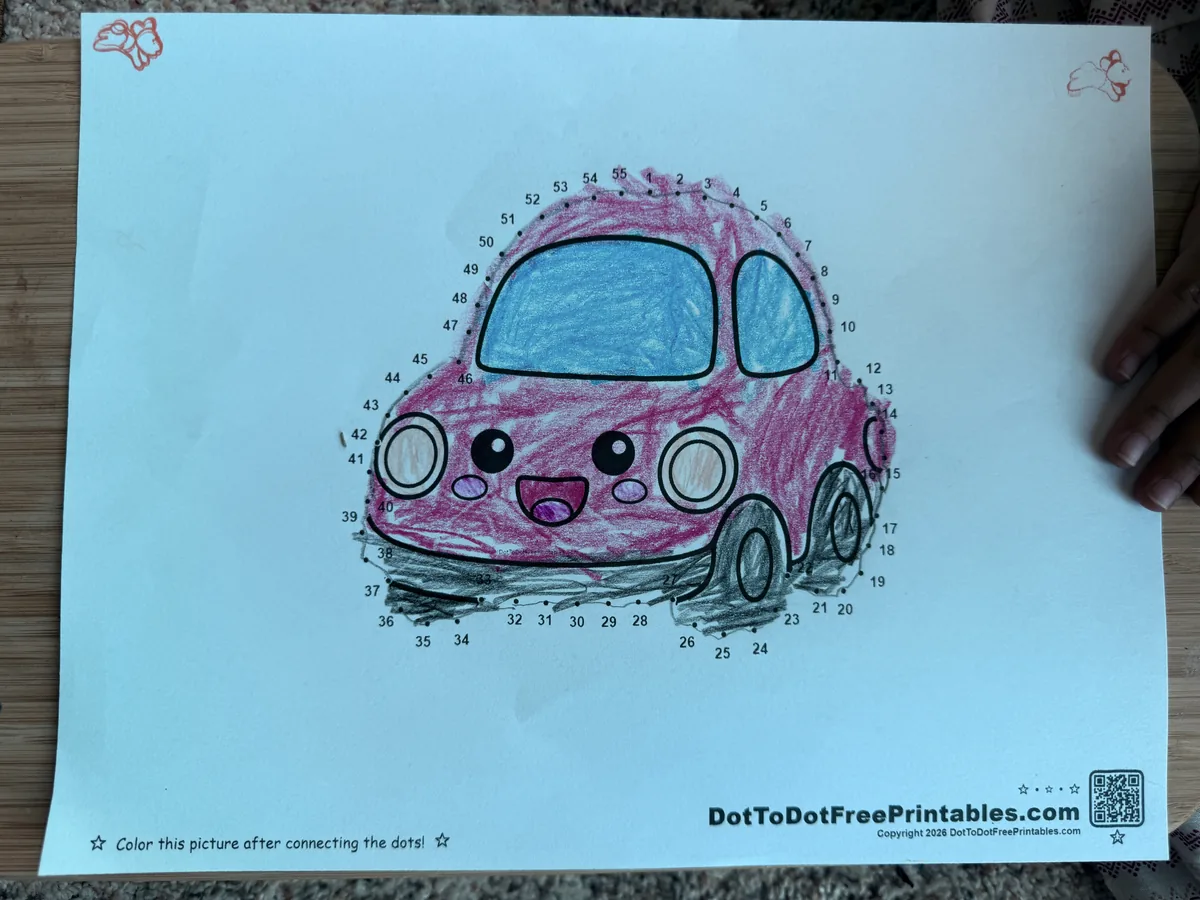
Classic Racing Red Car
Bright red is one of the most popular and recognizable car colours, long associated with speed and classic sports cars.
| Dot Range | Part | Color | Why this color | |
|---|---|---|---|---|
| Numeric | Alphabet | |||
| 1–14 | A–N | Body and bonnet | Crayola Scarlet | Racing red is one of the most iconic car body colours. |
| 15–28 | O–AB | Roof and windows | Crayola Sky Blue | A light blue tint suggests glass catching the sky’s reflection. |
| 29–42 | AC–AP | Wheels | Crayola Black | Tyres are almost always black rubber on every car. |
| 43–55 | AQ–BC | Lights and finishing details | Crayola Silver | Chrome trim and headlights are usually a shiny silver. |
Sunny Yellow Taxi Car
Bright yellow is a real, classic taxi colour used in cities around the world because it stands out clearly in traffic.
| Dot Range | Part | Color | Why this color | |
|---|---|---|---|---|
| Numeric | Alphabet | |||
| 1–14 | A–N | Body and bonnet | Crayola Yellow | Bright yellow is the traditional colour for taxi cabs worldwide. |
| 15–28 | O–AB | Roof and windows | Crayola Sky Blue | Window glass keeps the same soft blue tint in every colour scheme. |
| 29–42 | AC–AP | Wheels | Crayola Black | Black wheels look right under any body colour. |
| 43–55 | AQ–BC | Lights and finishing details | Crayola Silver | Silver trim and headlights add a finished, shiny look. |
Why Is the Cute Little Car Dot to Dot Printable Rated Easy?
The Cute Little Car is rated easy. Of its 55 dots, 38 run in straight lines, with 9 curved, 7 zigzag and 1 sharp-turn dots. The stretches to slow down for are roof and windows at dots 20–21 and wheels at dots 35–36. Follow the numbered order even when another dot looks nearer, and check the next number before each curve.
Straight
38 dots · 69%
Easiest — join two dots with one straight pencil stroke.
Curved
9 dots · 16%
24 26
Zigzag
7 dots · 13%
Quick in-and-out changes of direction. Good counting practice.
Sharp turns
1 dots · 2%
The hardest bits — tight corners where the line doubles back.
We traced all 55 dots on this exact worksheet by hand to write this — not a generic guess.
Key Sections to Know
Every notable stretch of the path, dot by dot.
| Dot Range | Pattern | Why It Matters | |
|---|---|---|---|
| Numeric | Alphabet | ||
| 20 21 | T U | Curved | Around roof and windows, the line eases through a smooth bend at dots 20–21; keep the pencil moving slowly. |
| 24 26 | X Z | Curved | Dots 24–26 round off roof and windows — connect them one at a time so the arc stays even. |
| 35 36 | AI AJ | Curved | The outline swings around wheels here; take dots 35 to 36 in short strokes. |
Bottom line: The Cute Little Car dot to dot is easy rated — 85% smooth lines with no tricky spots to watch for.
Made by a young artist
Example Completed Puzzle