Canada
Polar Bear Dot to Dot — Free 74-Dot Printable for Ages 5–7
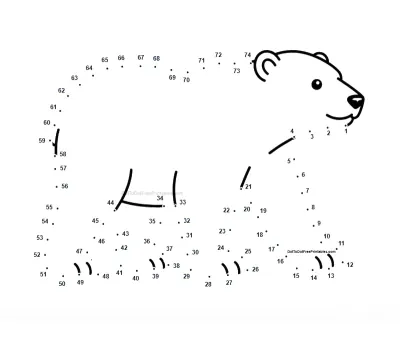
Connect 74 dots to reveal a powerful polar bear. This easy printable gives kids number-sequencing practice while introducing an animal specially adapted to life on Arctic sea ice.
Difficulty
Easy
Fun fact: About two-thirds of the world's polar bears live in Canada.
Downloaded29+timesYou’ve made a great choice!
Downloads now start from the button below. Tap it to get this puzzle's PDF.
Number Version
Connect the numbered dots from 1 to the end to reveal the picture.
Free for home and classroom use.
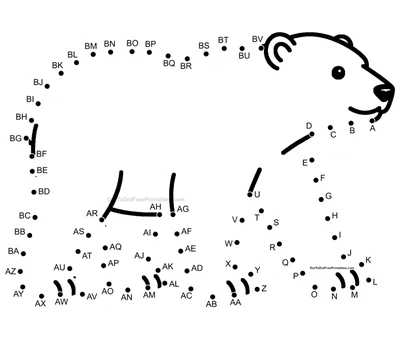
Alphabet Version
Includes alphabet-themed design for easy learning.
No sign-up needed. Opens as a PDF. Print on US Letter (8.5 × 11 inch) or A4 paper. Free for home and classroom use.
Canada
You might also like
Ages 5–7 — Easy
How to Solve the Polar Bear Dot-to-Dot Puzzle
Polar bears roam the frozen coasts and sea ice of Canada's Arctic. Their thick fur, small ears, and enormous paws help them stay warm and travel across snow, ice, and water. This 74-dot puzzle traces a polar bear from its nose to its broad paws. Start at dot 1 and take the journey one careful line at a time.
1–15 — The Nose and Head
Start at dot 1 and connect through dot 15 to shape the nose, muzzle, and rounded head. Keep the lines gentle around the face so the bear's profile looks smooth.
Fun fact!
A polar bear has an excellent sense of smell that helps it locate seals, its main prey, across the ice.
A polar bear has an excellent sense of smell that helps it locate seals, its main prey, across the ice.
16–30 — The Back and Shoulders
Continue from dot 16 to dot 30 along the strong shoulders and curved back. Try to make this long outline with steady strokes instead of lots of tiny marks.
Fun fact!
Polar bears are the largest land carnivores in Canada. Adult males can weigh several hundred kilograms.
Polar bears are the largest land carnivores in Canada. Adult males can weigh several hundred kilograms.
31–45 — The Hind Legs
Trace dots 31 through 45 to draw the rear legs and paws. Check each number carefully where the outline changes direction near the feet.
Fun fact!
A polar bear's wide paws spread its weight over snow and work like paddles when it swims.
A polar bear's wide paws spread its weight over snow and work like paddles when it swims.
46–60 — The Belly and Front Paws
Connect dots 46 to 60 beneath the body and around the front paws. Short, controlled lines will help you follow the tighter curves.
Fun fact!
Polar bears have black skin beneath fur that looks white. Their coat helps them blend into a snowy Arctic landscape.
Polar bears have black skin beneath fur that looks white. Their coat helps them blend into a snowy Arctic landscape.
61–74 — The Chest and Finish
Finish with dots 61 through 74, moving up the chest and back toward the head. Pause at the final dot and make sure no number was skipped.
Fun fact!
Sea ice is essential polar bear habitat because it provides a platform for hunting seals. Read the species profile from Environment and Climate Change Canada.
Sea ice is essential polar bear habitat because it provides a platform for hunting seals. Read the species profile from Environment and Climate Change Canada.
Excellent—your Arctic giant is complete! Leave the fur white and add pale blue shadows, or draw a snowy sea-ice background. Visit Parks Canada's polar bear page with a grown-up to learn more, then explore more free Canada printables.
Coloring Guide
Polar Bear: Classic Real-Life Colors
A polar bear is never plain white: its fur scatters blue in shadow, natural oils tint it gold, and this palette keeps those real casts.
| Dot Range | Part | Color | Why this color | |
|---|---|---|---|---|
| Numeric | Alphabet | |||
| 1–15 | A–O | The Nose and Head | Crayola Black | Polar bears have a dark nose and black skin under their white fur, so the nose is the darkest spot on the face. |
| 16–30 | P–AD | The Back and Shoulders | Crayola Sky Blue | The thick fur over the shoulders scatters daylight, so a bear on the ice often looks faintly blue-white along the back. |
| 31–45 | AE–AS | The Hind Legs | Crayola Goldenrod | Polar bear fur is not truly white; oil in the hollow hairs gives the legs a yellowish, golden tinge, strongest in older bears. |
| 46–60 | AT–BH | The Belly and Front Paws | Crayola Scarlet | Low sunrise or sunset light can warm the white fur on the belly and paws with a soft pink glow. |
| 61–74 | BI–BV | The Chest and Finish | Crayola Sky Blue | Snow light bouncing up onto the chest fills the deep fur with the same cool blue as the shadows on the ice. |
Polar Bear: Soft Natural Colors
On bright summer sea ice a clean bear looks cream, tan, and pale silver-grey, and these gentle tones match that sunlit Arctic look.
| Dot Range | Part | Color | Why this color | |
|---|---|---|---|---|
| Numeric | Alphabet | |||
| 1–15 | A–O | The Nose and Head | Crayola Silver | In the flat light of an Arctic day the clean fur of the head reads as pale silver-grey rather than bright white. |
| 16–30 | P–AD | The Back and Shoulders | Crayola Tan | Sun and dry blowing snow leave the exposed back and shoulders a warm cream-tan, the classic look of a bear on summer ice. |
| 31–45 | AE–AS | The Hind Legs | Crayola Sea Green | Where a bear rests beside meltwater pools, reflected light can tint the hind-leg fur a faint pale green. |
| 46–60 | AT–BH | The Belly and Front Paws | Crayola Silver | Shaded beneath the body, the belly and front paws stay a soft silvery grey out of the direct sun. |
| 61–74 | BI–BV | The Chest and Finish | Crayola Tan | The chest fur is thickest and least washed by meltwater, so it holds a gentle tan warmth in daylight. |
Polar Bear: Bold Real-Life Colors
Up close a polar bear shows black skin, grease-darkened legs, and even green algae in its hollow hairs, and this bolder set uses those surprising real colours.
| Dot Range | Part | Color | Why this color | |
|---|---|---|---|---|
| Numeric | Alphabet | |||
| 1–15 | A–O | The Nose and Head | Crayola Forest Green | Polar bears in zoos sometimes turn green when algae grow inside their hollow guard hairs, showing first around the head. |
| 16–30 | P–AD | The Back and Shoulders | Crayola Brown | Beneath the pale coat a polar bear's skin is black, and worn guard hairs along the back can look deep brown. |
| 31–45 | AE–AS | The Hind Legs | Crayola Orange | Seal oil and blubber grease work down into the leg fur, staining the hind legs a strong orange-yellow. |
| 46–60 | AT–BH | The Belly and Front Paws | Crayola Forest Green | Damp belly fur pressed against tundra plants and pond algae picks up a dark greenish stain. |
| 61–74 | BI–BV | The Chest and Finish | Crayola Brown | The bare black skin shows through most at the chest, giving the finish a dark brown-black tone. |
Why Is the Polar Bear Dot to Dot Printable Rated Easy?
The Polar Bear is rated easy. Of its 74 dots, 48 run in straight lines, with 16 curved, 4 zigzag and 6 sharp-turn dots. The stretches to slow down for are back and shoulders at dots 28–29 and hind legs at dots 40–42. Follow the numbered order even when another dot looks nearer, and check the next number before each curve.
Straight
48 dots · 65%
Easiest — join two dots with one straight pencil stroke.
Curved
16 dots · 22%
40 42
Zigzag
4 dots · 5%
Quick in-and-out changes of direction. Good counting practice.
Sharp turns
6 dots · 8%
The hardest bits — tight corners where the line doubles back.
We traced all 74 dots on this exact worksheet by hand to write this — not a generic guess.
Key Sections to Know
Every notable stretch of the path, dot by dot.
| Dot Range | Pattern | Why It Matters | |
|---|---|---|---|
| Numeric | Alphabet | ||
| 28 29 | AB AC | Curved | Follow back and shoulders as it curls from dot 28 to dot 29, easing the line rather than snapping it. |
| 40 42 | AN AP | Curved | Around hind legs, the line eases through a smooth bend at dots 40–42; keep the pencil moving slowly. |
| 50 51 | AX AY | Curved | Dots 50–51 round off belly and front paws — connect them one at a time so the arc stays even. |
Bottom line: The Polar Bear dot to dot is easy rated — 86% smooth lines with no tricky spots to watch for.