Flowers
Snowdrop Dot to Dot — 145 Dots, Free PDF
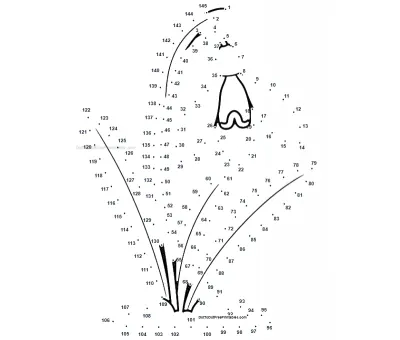
Connect 145 dots to reveal an elegant snowdrop flower. This printable helps children strengthen number sequencing, pencil control, visual tracking, patience, and concentration.
Difficulty
Easy
Fun fact: Snowdrops can bloom while snow is still on the ground, making them one of the earliest signs of spring in many gardens.
Downloaded61+timesYou’ve made a great choice!
Downloads now start from the button below. Tap it to get this puzzle's PDF.
Number Version
Connect the numbered dots from 1 to the end to reveal the picture.
Free for home and classroom use.
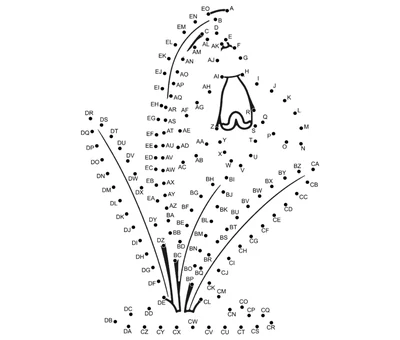
Alphabet Version
Includes alphabet-themed design for easy learning.
No sign-up needed. Opens as a PDF. Print on US Letter (8.5 × 11 inch) or A4 paper. Free for home and classroom use.
Flowers
You might also like
Ages 6–8 — Easy


How to Solve the Snowdrop Flower Dot-to-Dot Puzzle
Snowdrops have earned their name honestly — in many gardens, they are tough enough to push up and bloom while snow is still covering the ground, making them one of the very first signs that spring is on its way. This detailed 145-dot puzzle, the longest in the flowers collection, follows the plant from its nodding bloom down the curved stem to its long leaves across six stages. Find dot 1 at the hanging flower and settle in for a satisfying, longer challenge.
1–24 — The Nodding Bloom
Connect dots 1 through 24 carefully around the snowdrop's hanging flower. Because the bloom faces downward, take extra care to follow the numbers in order rather than guessing the shape.
Fun fact!
Snowdrop flowers hang downward from the stem, which gives them their familiar nodding shape and helps protect their delicate insides from rain and snow.
Snowdrop flowers hang downward from the stem, which gives them their familiar nodding shape and helps protect their delicate insides from rain and snow.
25–48 — The Outer Petals
Continue from dot 25 to dot 48 to shape the three long outer petals. These petals are larger and simpler than the flower's inner parts, so long, smooth strokes work well.
Fun fact!
A snowdrop has three larger outer tepals and three shorter inner tepals rather than ordinary petals — tepals are petals and petal-like sepals that look the same.
A snowdrop has three larger outer tepals and three shorter inner tepals rather than ordinary petals — tepals are petals and petal-like sepals that look the same.
49–72 — The Inner Flower
Follow dots 49 through 72 around the smaller inner parts of the bloom with short, steady strokes. This is the most delicate section, so slow, careful movements matter more than speed.
Fun fact!
The inner tepals often carry delicate green markings near their tips, a detail many people miss until they look closely.
The inner tepals often carry delicate green markings near their tips, a detail many people miss until they look closely.
73–96 — The Curved Stem
Trace dots 73 through 96 down the slender, curved stem, checking each number before moving ahead. The stem's gentle bend means the line direction shifts partway through, so watch closely.
Fun fact!
The flower stem bends near the top so the blossom can face toward the ground, which is thought to help shelter the flower's pollen from rain.
The flower stem bends near the top so the blossom can face toward the ground, which is thought to help shelter the flower's pollen from rain.
97–120 — The First Leaves
Connect dots 97 through 120 to add the first group of narrow leaves. Keep the leaves slim and pointed to match the snowdrop's slender growing habit.
Fun fact!
Snowdrop leaves are long, narrow, and surprisingly tough, helping them push up through cold soil and even fallen autumn leaves.
Snowdrop leaves are long, narrow, and surprisingly tough, helping them push up through cold soil and even fallen autumn leaves.
121–145 — The Leaves and Finish
Complete dots 121 through 145 to finish the remaining leaves and the full plant. Twenty-five dots remain in this final stretch — a strong finish caps off the longest puzzle in the collection.
Fun fact!
Snowdrops grow from underground bulbs that store energy all year, allowing the plant to bloom again as soon as conditions are right.
Snowdrops grow from underground bulbs that store energy all year, allowing the plant to bloom again as soon as conditions are right.
Your snowdrop is ready to welcome spring! Leave the flower white, add its delicate green markings, and color the leaves a fresh spring green. Explore more free flower dot-to-dot printables to keep the fun going.
Coloring Guide
Classic White Snowdrop with Green Heart
Most wild snowdrops are pure white with a single green, heart-shaped mark on the inner petals, like the well-known variety 'Atkinsii'.
| Dot Range | Part | Color | Why this color | |
|---|---|---|---|---|
| Numeric | Alphabet | |||
| 1–24 | A–X | Nodding bloom | Crayola Silver (outline only) | Snowdrop flowers are always white, so an outline keeps the shape visible on white paper. |
| 25–48 | Y–AV | Outer petals | Crayola Silver (outline only) | The three long outer petals stay plain white in almost every snowdrop. |
| 49–72 | AW–BT | Inner flower | Crayola Green | The shorter inner petals carry a green heart-shaped marking near their tips. |
| 73–96 | BU–CR | Curved stem | Crayola Forest Green | Snowdrop stems bend near the top so the flower can nod toward the ground. |
| 97–120 | CS–DP | First leaves | Crayola Sea Green | Snowdrop leaves have a slightly gray-green, waxy look that helps them push through cold soil. |
| 121–145 | DQ–EO | Leaves and finish | Crayola Sea Green | Keeping the leaves consistent shows the full narrow, upright leaf pair. |
Double Snowdrop (Lady Beatrix Stanley style)
Some real snowdrops, like 'Lady Beatrix Stanley', are doubles with extra fluffy inner petals edged in green, giving a fuller, petticoat-like bloom.
| Dot Range | Part | Color | Why this color | |
|---|---|---|---|---|
| Numeric | Alphabet | |||
| 1–24 | A–X | Nodding bloom | Crayola Silver (outline only) | Double snowdrops still open from white outer petals before revealing their extra layers. |
| 25–48 | Y–AV | Outer petals | Crayola Silver (outline only) | The outer segments of double varieties stay pure white just like single snowdrops. |
| 49–72 | AW–BT | Inner flower | Crayola Green | Double snowdrops have extra frilly petals with bright green tips packed inside. |
| 73–96 | BU–CR | Curved stem | Crayola Forest Green | The nodding curve at the top of the stem is the same in every snowdrop variety. |
| 97–120 | CS–DP | First leaves | Crayola Sea Green | Gray-green leaves are typical across snowdrop varieties, doubles included. |
| 121–145 | DQ–EO | Leaves and finish | Crayola Sea Green | A full matching leaf pair completes the plant. |
Rare Yellow Snowdrop
A small number of real snowdrops, such as 'Lady Elphinstone', replace the usual green markings with yellow, a rare and sought-after form collectors prize.
| Dot Range | Part | Color | Why this color | |
|---|---|---|---|---|
| Numeric | Alphabet | |||
| 1–24 | A–X | Nodding bloom | Crayola Silver (outline only) | Even yellow-marked snowdrops keep white petals as their base color. |
| 25–48 | Y–AV | Outer petals | Crayola Silver (outline only) | Outer petals remain white regardless of the marking color. |
| 49–72 | AW–BT | Inner flower | Crayola Goldenrod | Rare snowdrop varieties swap the usual green marking for a warm yellow. |
| 73–96 | BU–CR | Curved stem | Crayola Forest Green | Yellow-marked snowdrops still have ordinary green stems. |
| 97–120 | CS–DP | First leaves | Crayola Sea Green | Foliage color does not change even in rare marking varieties. |
| 121–145 | DQ–EO | Leaves and finish | Crayola Sea Green | Consistent leaf color completes this uncommon variety. |
Why Is the Snowdrop Flower Dot to Dot Printable Rated Easy?
The Snowdrop Flower is rated easy. Of its 145 dots, 109 run in straight lines, with 8 curved, 13 zigzag and 15 sharp-turn dots. The stretches to slow down for are curved stem at dots 91–95 and nodding bloom at dots 22–23. Follow the numbered order even when another dot looks nearer, and check the next number before each turn.
Straight
109 dots · 75%
Easiest — join two dots with one straight pencil stroke.
Curved
8 dots · 6%
22 23
Zigzag
13 dots · 9%
91 95
Sharp turns
15 dots · 10%
The hardest bits — tight corners where the line doubles back.
We traced all 145 dots on this exact worksheet by hand — the zigzag at dots 91–95 is where it got tricky, and you can check that against your own printout.
Key Sections to Know
Every notable stretch of the path, dot by dot.
| Dot Range | Pattern | Why It Matters | |
|---|---|---|---|
| Numeric | Alphabet | ||
| 22 23 | V W | Curved | Around nodding bloom, the line eases through a smooth bend at dots 22–23; keep the pencil moving slowly. |
| 91 95 | CM CQ | Zigzag | The line saw-tooths along curved stem from dot 91 to dot 95; check every number as you go. |
Bottom line: The Snowdrop Flower dot to dot is easy rated — 81% smooth lines with just 1 short section to watch for.