Flowers
Nasturtium Dot to Dot — Free 96-Dot Printable for Ages 5–8
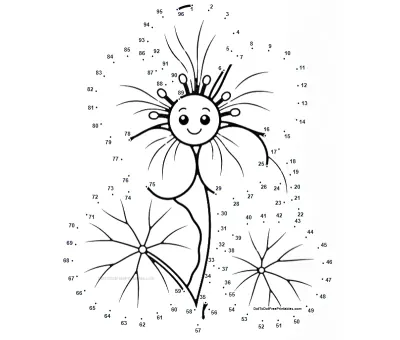
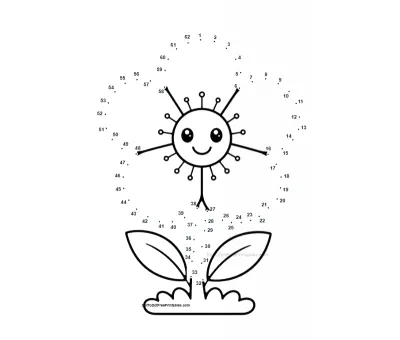
Connect 96 dots to reveal a vibrant nasturtium flower. This medium printable helps children practice number sequencing, pencil control, visual tracking, patience, and concentration.
Difficulty
Medium
Fun fact: Nasturtium flowers and leaves are edible and have a peppery flavor, so they are sometimes added to salads. Always ask a grown-up before tasting any plant.
Downloaded2+timesYou’ve made a great choice!
Downloads now start from the button below. Tap it to get this puzzle's PDF.
Number Version
Connect the numbered dots from 1 to the end to reveal the picture.
Free for home and classroom use.
Alphabet Version
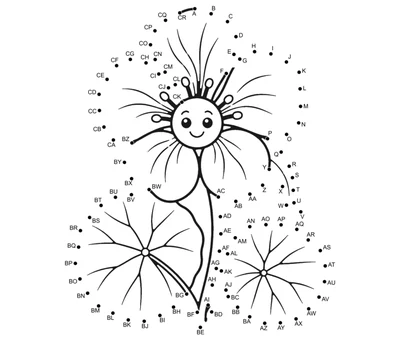
Includes alphabet-themed design for easy learning.
No sign-up needed. Opens as a PDF. Print on US Letter (8.5 × 11 inch) or A4 paper. Free for home and classroom use.
Flowers
You might also like
Ages 5–8 — Medium


How to Solve the Nasturtium Flower Dot-to-Dot Puzzle
Nasturtiums are a favorite in vegetable gardens for an unusual reason — their peppery flowers and leaves are edible, so gardeners often plant them right alongside their vegetables. Always ask a grown-up before tasting any plant. This 96-dot puzzle follows the plant's lively bloom into its rounded leaves and trailing stems across five stages. Find dot 1 at the flower's center and follow the numbers through to a finished plant at dot 96.
1–19 — The Flower Center
Connect dots 1 through 19 carefully around the nasturtium's detailed center. This is the busiest section of the puzzle, so encourage checking each number before drawing the next short segment.
Fun fact!
Nasturtium flowers usually have five petals arranged around a funnel-shaped center that leads down to a thin nectar spur.
Nasturtium flowers usually have five petals arranged around a funnel-shaped center that leads down to a thin nectar spur.
20–38 — The Bright Petals
Continue from dot 20 to dot 38 to shape the broad, gently ruffled petals. Soft, wavy lines suit these petals better than perfectly straight ones.
Fun fact!
Nasturtium flowers bloom in warm shades including yellow, orange, red, cream, and deep maroon — all on the very same plant.
Nasturtium flowers bloom in warm shades including yellow, orange, red, cream, and deep maroon — all on the very same plant.
39–58 — The Trailing Stem
Follow dots 39 through 58 along the curving stem using steady pencil strokes. The gentle curves here are good practice for smooth direction changes.
Fun fact!
Some nasturtiums grow as compact mounds, while others send out long trailing or climbing stems that can stretch several meters.
Some nasturtiums grow as compact mounds, while others send out long trailing or climbing stems that can stretch several meters.
59–77 — The Round Leaves
Trace dots 59 through 77 around the plant's distinctive rounded leaves. Try to keep the outline smooth and circular, since nasturtium leaves are famously round.
Fun fact!
A nasturtium leaf connects to its stalk near the center rather than the edge, giving it a shape like a tiny shield or lily pad.
A nasturtium leaf connects to its stalk near the center rather than the edge, giving it a shape like a tiny shield or lily pad.
78–96 — The Leaves and Finish
Complete dots 78 through 96 to add the remaining leaves and finish the plant. Nineteen dots remain, so keep a steady pace all the way to the last connection.
Fun fact!
Water droplets often bead up and roll straight across the waxy surface of a nasturtium leaf instead of soaking in.
Water droplets often bead up and roll straight across the waxy surface of a nasturtium leaf instead of soaking in.
Your nasturtium is blooming! Color it sunny yellow, orange, scarlet, or mix all three for a colorful garden display. Explore more free flower dot-to-dot printables to keep the fun going.
Coloring Guide
Golden Yellow-Orange Nasturtium
The most familiar nasturtium coloring: bright yellow petals with a warm orange blotch near the center, seen in countless garden beds.
| Dot Range | Part | Color | Why this color | |
|---|---|---|---|---|
| Numeric | Alphabet | |||
| 1–19 | A–S | Flower center | Crayola Orange | Nasturtium centers often glow a deeper orange than the petals, guiding pollinators inward. |
| 20–38 | T–AL | Bright petals | Crayola Yellow | Sunny yellow is one of the most common natural nasturtium petal colors. |
| 39–58 | AM–BF | Trailing stem | Crayola Forest Green | Nasturtium stems are smooth and pale green, often with a slight blue-green tint. |
| 59–77 | BG–BY | Round leaves | Crayola Green | Nasturtium leaves are famously round like tiny lily pads, in fresh green. |
| 78–96 | BZ–CR | Leaves and finish | Crayola Green | Keeping the leaf color consistent finishes the trailing vine realistically. |
Empress of India Scarlet Nasturtium
'Empress of India' is a real, popular nasturtium variety with deep scarlet-red flowers set against blue-green foliage.
| Dot Range | Part | Color | Why this color | |
|---|---|---|---|---|
| Numeric | Alphabet | |||
| 1–19 | A–S | Flower center | Crayola Red | A darker red center matches the deep tone typical of scarlet nasturtium varieties. |
| 20–38 | T–AL | Bright petals | Crayola Scarlet | Scarlet is the signature color of the well-known Empress of India variety. |
| 39–58 | AM–BF | Trailing stem | Crayola Forest Green | Even richly colored varieties keep the same natural green stem. |
| 59–77 | BG–BY | Round leaves | Crayola Sea Green | This variety is known for blue-green foliage that contrasts with its bright red blooms. |
| 78–96 | BZ–CR | Leaves and finish | Crayola Sea Green | Matching the blue-green tone throughout keeps the plant true to its variety. |
Peach Melba Nasturtium
'Peach Melba' is a named nasturtium variety with creamy yellow petals brushed with a bold orange center, like the dessert it is named after.
| Dot Range | Part | Color | Why this color | |
|---|---|---|---|---|
| Numeric | Alphabet | |||
| 1–19 | A–S | Flower center | Crayola Orange | The bold orange blotch at the center is the signature mark of the Peach Melba variety. |
| 20–38 | T–AL | Bright petals | Crayola Dandelion | A creamier yellow than the classic scheme reflects this variety's softer petal tone. |
| 39–58 | AM–BF | Trailing stem | Crayola Forest Green | Stem color stays natural green across nasturtium varieties. |
| 59–77 | BG–BY | Round leaves | Crayola Sea Green | Peach Melba is also known for its blue-green leaves. |
| 78–96 | BZ–CR | Leaves and finish | Crayola Sea Green | Consistent foliage color completes the look. |
Why Is the Nasturtium Flower Dot to Dot Printable Rated Medium?
The Nasturtium Flower is rated medium. Its 96 dots split into 46 straight, 30 curved, 8 zigzag and 12 sharp-turn dots — the direction changes are what lift it above an easy outline. The stretches to slow down for are flower center at dots 3–4 and trailing stem at dots 39–40. Follow the numbered order even when another dot looks nearer, and check the next number before each curve.
Straight
46 dots · 48%
Easiest — join two dots with one straight pencil stroke.
Curved
30 dots · 31%
84 86
Zigzag
8 dots · 8%
Quick in-and-out changes of direction. Good counting practice.
Sharp turns
12 dots · 13%
The hardest bits — tight corners where the line doubles back.
We traced all 96 dots on this exact worksheet by hand to write this — not a generic guess.
Key Sections to Know
Every notable stretch of the path, dot by dot.
| Dot Range | Pattern | Why It Matters | |
|---|---|---|---|
| Numeric | Alphabet | ||
| 3 4 | C D | Curved | Dots 3–4 round off flower center — connect them one at a time so the arc stays even. |
| 14 15 | N O | Curved | The outline swings around flower center here; take dots 14 to 15 in short strokes. |
| 39 40 | AM AN | Curved | A gentle curve shapes trailing stem across dots 39–40. Spot dot 40 before you commit to the line. |
| 45 46 | AS AT | Curved | Follow trailing stem as it curls from dot 45 to dot 46, easing the line rather than snapping it. |
| 84 86 | CF CH | Curved | Around leaves, the line eases through a smooth bend at dots 84–86; keep the pencil moving slowly. |
| 93 94 | CO CP | Curved | Dots 93–94 round off leaves — connect them one at a time so the arc stays even. |
Bottom line: The Nasturtium Flower dot to dot is medium rated — 79% smooth lines with no tricky spots to watch for.