Ocean
Seahorse Dot to Dot — Free 35-Dot Printable for Ages 5–8
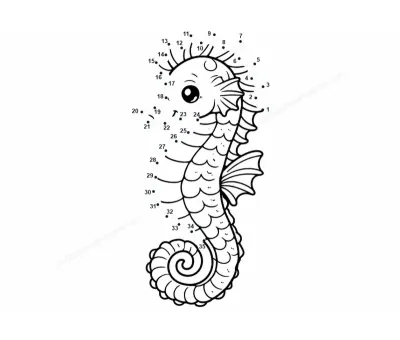
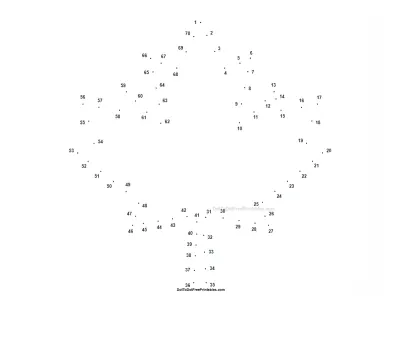
Connect the dots to reveal a charming seahorse floating through the sea! With just 35 dots, this puzzle suits young children building number sequencing skills with an adorable ocean friend.
Difficulty
Medium
Fun fact: In seahorses, the dad carries the babies and gives birth!
Downloaded7+timesYou’ve made a great choice!
Downloads now start from the button below. Tap it to get this puzzle's PDF.
Free for home and classroom use.
No sign-up needed. Opens as a PDF. Print on US Letter (8.5 × 11 inch) or A4 paper. Free for home and classroom use.
Ocean
You might also like
Ages 5–8 — Medium
How to Solve the Seahorse Dot-to-Dot Puzzle
The seahorse is one of the most extraordinary creatures in the entire ocean — not just for how it looks, but for how it lives. It swims upright, it moves by flickering a tiny fin on its back, it anchors itself to seaweed with its curling tail, and the father is the one who carries and gives birth to the babies. If you were designing an animal from scratch, you would never imagine something this wonderfully unusual. Let's draw one together!
1–6 — The Head and Snout
Start at dot 1 and connect through to dot 6 to draw the seahorse's distinctive horse-like head and long, tube-shaped snout. This tiny section is a lovely, manageable start for younger children — just six dots to build confidence before the bigger sections ahead. The snout is one of the most unusual shapes in the animal kingdom.
Fun fact!
A seahorse has no teeth and no stomach. It sucks in tiny shrimp and plankton through its snout like a vacuum cleaner, and because food passes through so quickly, it must eat almost constantly — up to 3,000 brine shrimp per day. Being a seahorse is essentially a full-time eating job.
A seahorse has no teeth and no stomach. It sucks in tiny shrimp and plankton through its snout like a vacuum cleaner, and because food passes through so quickly, it must eat almost constantly — up to 3,000 brine shrimp per day. Being a seahorse is essentially a full-time eating job.
7–16 — The Curved Neck and Mane
Continue from dot 7 to dot 16 to trace the beautifully curved neck and the ridge along the back — sometimes called the seahorse's mane. This section has the loveliest curve in the whole puzzle. Children learn to follow a long, smooth arc, keeping their pencil moving slowly and evenly for the best result.
Fun fact!
Seahorses are slow swimmers that drift gently through the water. Rather than chasing prey, the seahorse relies on camouflage and surprise — drifting close to food and then snapping it up quickly.
Seahorses are slow swimmers that drift gently through the water. Rather than chasing prey, the seahorse relies on camouflage and surprise — drifting close to food and then snapping it up quickly.
17–26 — The Body Rings
Trace dots 17 through 26 to draw the distinctively segmented body — those raised bony rings that run from neck to tail. Children learn here that animal bodies are not always smooth, and begin to notice the beautiful structure of the seahorse's natural armour. This section rewards careful, deliberate dot-following.
Fun fact!
A seahorse is not covered in scales like most fish — instead its body is encased in bony plates arranged in rings. This makes it quite rigid, which is why it cannot wriggle like most fish. It is essentially wearing a suit of armour, which also makes it one of the toughest small creatures in the sea for a predator to swallow.
A seahorse is not covered in scales like most fish — instead its body is encased in bony plates arranged in rings. This makes it quite rigid, which is why it cannot wriggle like most fish. It is essentially wearing a suit of armour, which also makes it one of the toughest small creatures in the sea for a predator to swallow.
27–35 — The Curling Tail
Finish the puzzle by connecting dots 27 through 35 to draw the long, curling tail that sweeps beneath the body. The tail is one of the most satisfying shapes to draw — children practise a tight, diminishing spiral that is both challenging and deeply rewarding. Nine dots to the finish!
Fun fact!
The seahorse tail is prehensile — meaning it can grip things, just like a monkey's tail. Seahorses anchor themselves to coral and seaweed with their tails to avoid being swept away by currents. During mating, a male and female will wrap their tails together and drift through the water side by side — a lovely sight in the ocean.
The seahorse tail is prehensile — meaning it can grip things, just like a monkey's tail. Seahorses anchor themselves to coral and seaweed with their tails to avoid being swept away by currents. During mating, a male and female will wrap their tails together and drift through the water side by side — a lovely sight in the ocean.
Lovely work — your seahorse is complete! Did you know seahorses come in over 45 different species, in colours ranging from bright yellow to deep purple to almost completely transparent? Colour yours however you like — in the seahorse world, anything goes. Looking for your next challenge? Explore more ocean dot to dot printables to keep the fun going.
Coloring Guide
Seahorse: Classic Real-Life Colors
Seahorses often wear the greens and soft blues of the seagrass they cling to, and this palette keeps them in that natural setting.
- 1–6 (The Head and Snout): Crayola Sea Green — Many seahorses turn greenish to blend with seaweed, so a soft sea-green on the horse-like head is true to life.
- 7–16 (The Curved Neck and Mane): Crayola Sky Blue — A pale blue along the curved neck suits the lighter species and shows off the smoothest arc in the drawing.
- 17–26 (The Body Rings): Crayola Cornflower — The body is wrapped in bony rings instead of scales, and a mid-blue helps those raised ridges stand out.
- 27–35 (The Curling Tail): Crayola Sea Green — The gripping tail returns to sea-green, matching the head so the whole seahorse looks like one plant-coloured animal.
Seahorse: Soft Natural Colors
These pale silvers and whites match the almost transparent seahorse species and the way any seahorse looks in bright, shallow sunlight.
- 1–6 (The Head and Snout): Crayola Silver — Some seahorses are nearly see-through, and a pale silver head hints at that near-transparent, sunlit look.
- 7–16 (The Curved Neck and Mane): Crayola Gray — Soft grey keeps the long neck curve gentle, like a pale seahorse drifting in bright shallow water.
- 17–26 (The Body Rings): Crayola White — Near-white on the bony rings makes each raised band catch the light the way armour plates shine.
- 27–35 (The Curling Tail): Crayola Silver — Silver on the coiling tail keeps it light and delicate as it spirals down to the finish.
Seahorse: Bold Real-Life Colors
Seahorses really do come in strong oranges, reds and browns, and this bolder palette leans into those vivid reef colours.
- 1–6 (The Head and Snout): Crayola Orange — Bright orange and yellow seahorses are common on reefs, so a bold orange head is realistic as well as eye-catching.
- 7–16 (The Curved Neck and Mane): Crayola Red Orange — A deep red-orange along the back ridge echoes the strong colours seahorses flash when courting a mate.
- 17–26 (The Body Rings): Crayola Brown — Brown suits the many seahorses that match muddy or woody backgrounds, and it deepens the ringed texture.
- 27–35 (The Curling Tail): Crayola Orange — A vivid orange tail draws the eye to the part a seahorse uses to grip weed and coral against the current.
Why Is the Seahorse Dot to Dot Printable Rated Medium?
The Seahorse is rated medium. Its 35 dots split into 12 straight, 6 curved, 9 zigzag and 8 sharp-turn dots — the direction changes are what lift it above an easy outline. The stretch to slow down for is body rings at dots 18–19. Follow the numbered order even when another dot looks nearer, and check the next number before each curve.
Straight
12 dots · 34%
Easiest — join two dots with one straight pencil stroke.
Curved
6 dots · 17%
18 19
Zigzag
9 dots · 26%
Quick in-and-out changes of direction. Good counting practice.
Sharp turns
8 dots · 23%
The hardest bits — tight corners where the line doubles back.
We traced all 35 dots on this exact worksheet by hand to write this — not a generic guess.
Key Sections to Know
Every notable stretch of the path, dot by dot.
| Dot Range | Pattern | Why It Matters |
|---|---|---|
| 18 19 | Curved | Around body rings, the line eases through a smooth bend at dots 18–19; keep the pencil moving slowly. |
| 21 22 | Curved | Dots 21–22 round off body rings — connect them one at a time so the arc stays even. |
Bottom line: The Seahorse dot to dot is medium rated — 51% smooth lines with no tricky spots to watch for.