Playgrounds
Roller Coaster Dot to Dot — Free 133-Dot Printable for Ages 7–10
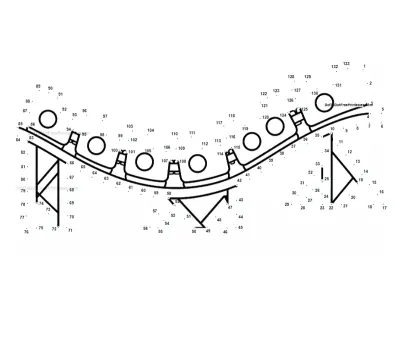
Connect 133 dots to reveal a full playground roller coaster, loops and all. This is our toughest playground puzzle yet, built for kids who've already worked through the easier sheets and want a real test of patience and pencil control.
Difficulty
Hard
Fun fact: A looping roller coaster opened in Paris in 1846. Riders complained it hurt their necks, and engineers needed well over a century to design the smooth teardrop loops used today.
Downloaded11+timesYou’ve made a great choice!
Downloads now start from the button below. Tap it to get this puzzle's PDF.
Number Version
Connect the numbered dots from 1 to the end to reveal the picture.
Free for home and classroom use.
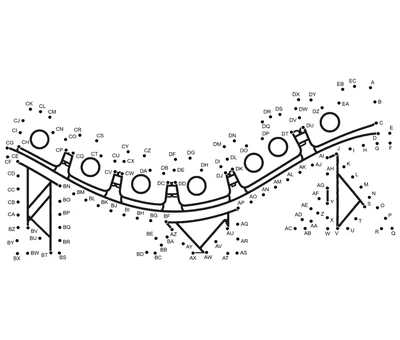
Alphabet Version
Includes alphabet-themed design for easy learning.
No sign-up needed. Opens as a PDF. Print on US Letter (8.5 × 11 inch) or A4 paper. Free for home and classroom use.
Playgrounds
You might also like
Ages 7–10 — Hard
How to Solve the Roller Coaster Playground Dot-to-Dot Puzzle
Six sections. A hundred and thirty-three dots. This is the biggest playground puzzle in the set, and it doesn't pretend otherwise — the track climbs, dips, loops, and finally rolls back down to the platform where it started. Kids who've already finished the swing, slide, or seesaw sheets will recognise the format, but the sheer length here changes the feel of the whole thing. Slow, steady pencil work wins the day. Find dot 1 at the base of the first hill, and let's build something worth screaming about!
1–22 — The Lift Hill
Start at dot 1 and work through to dot 22 to draw the long, steep climb that pulls the coaster car up to its highest point. These lines mostly run in one steady diagonal direction, with one sharp corner near dot 5, which makes this a good stretch for building rhythm before the puzzle gets more complicated.
Fun fact!
Most roller coasters use a chain lift to haul the car up that first hill — it's usually the only part of the ride powered by a motor. Everything that happens after the top of that hill runs purely on gravity and momentum.
Most roller coasters use a chain lift to haul the car up that first hill — it's usually the only part of the ride powered by a motor. Everything that happens after the top of that hill runs purely on gravity and momentum.
23–44 — The First Drop
Continue from dot 23 to dot 44 to trace the steep plunge down from the peak. The angle here is sharper than anywhere else on the sheet, so encourage a firm, confident hand rather than a shaky, hesitant one — a fast drop needs a fast, sure line.
Fun fact!
The very first drop on a roller coaster is almost always the tallest and steepest of the whole ride. Coaster designers place it early on purpose, since it's usually where a track reaches its top speed.
The very first drop on a roller coaster is almost always the tallest and steepest of the whole ride. Coaster designers place it early on purpose, since it's usually where a track reaches its top speed.
45–66 — The Loop
Trace dots 45 through 66 to build the big loop at the heart of the ride. This section curves back on itself, which is trickier than a straight climb or drop — go slowly and check the next dot before committing to each curve.
Fun fact!
Early looping coasters used a perfectly circular loop, and riders often complained of neck strain from the sudden change in force. Modern loops use a teardrop shape instead, which feels much gentler on the body at the same speed.
Early looping coasters used a perfectly circular loop, and riders often complained of neck strain from the sudden change in force. Modern loops use a teardrop shape instead, which feels much gentler on the body at the same speed.
67–88 — The Camelback Hills
Connect dots 67 to 88 to draw the smaller rolling hills that follow the loop. These bumps come one after another in quick succession, giving kids practice with short, controlled strokes rather than one long sweep.
Fun fact!
These smaller rises are sometimes called 'camelback' hills because a series of them in a row resembles a camel's humps. Riders often feel a brief lift out of their seat cresting each one — a real, if small, moment of weightlessness.
These smaller rises are sometimes called 'camelback' hills because a series of them in a row resembles a camel's humps. Riders often feel a brief lift out of their seat cresting each one — a real, if small, moment of weightlessness.
89–110 — The Final Turn
Work from dot 89 to dot 110 to shape the sweeping curve that brings the track back toward the station. This bend is wide and gradual, a nice change of pace after the tighter loop earlier in the puzzle.
Fun fact!
Coaster designers call this stretch the 'return run.' It's built wide and banked so the car can hold its speed through the curve without needing brakes, saving the actual braking for the very end.
Coaster designers call this stretch the 'return run.' It's built wide and banked so the car can hold its speed through the curve without needing brakes, saving the actual braking for the very end.
111–133 — The Station and Platform
Finish by connecting dots 111 through 133 to draw the station platform where the ride began and ends. Twenty-three dots to go on the biggest puzzle in the playground set — a slow, careful finish here is the real mark of persistence.
Fun fact!
The braking section at the end of a real roller coaster is one of its most heavily engineered parts. It has to bring a car full of riders from full speed to a complete stop smoothly enough that nobody gets jolted.
The braking section at the end of a real roller coaster is one of its most heavily engineered parts. It has to bring a car full of riders from full speed to a complete stop smoothly enough that nobody gets jolted.
That's the whole ride, start to finish! Colour the track in bold, bright loops and give the coaster car whatever wild paint job you like. Explore more playground dot to dot printables to keep the fun going.
Coloring Guide
Roller Coaster Playground: Classic Real-Life Colors
A real coaster is painted steel track on a support lattice with a roofed station, and this palette keeps the hill, drop, loop, hills, turn and station close to how parks paint them.
| Dot Range | Part | Color | Why this color | |
|---|---|---|---|---|
| Numeric | Alphabet | |||
| 1–22 | A–V | The Lift Hill | Crayola Scarlet | Coaster track is steel tube rail on a lattice of supports, usually painted one bright colour along the whole lift hill. |
| 23–44 | W–AR | The First Drop | Crayola Sky Blue | The drop is the same painted steel rail, its colour carried down so riders can trace the plunge from the ground. |
| 45–66 | AS–BN | The Loop | Crayola Goldenrod | The loop is a single bent steel spine, often painted a contrasting colour so its teardrop shape stands out against the sky. |
| 67–88 | BO–CJ | The Camelback Hills | Crayola Scarlet | The rolling hills keep the track colour, while the bracing beneath is usually left a plain structural shade. |
| 89–110 | CK–DF | The Final Turn | Crayola Sky Blue | The banked return curve keeps the track colour, tilted so the rail leans into the bend. |
| 111–133 | DG–EC | The Station and Platform | Crayola Goldenrod | The station is a roofed timber or steel building, painted to match the ride with a shaded platform beneath. |
Roller Coaster Playground: Soft Natural Colors
This lighter set shows the ride against a bright sky, when the painted rail looks pale and thin in the glare.
| Dot Range | Part | Color | Why this color | |
|---|---|---|---|---|
| Numeric | Alphabet | |||
| 1–22 | A–V | The Lift Hill | Crayola Silver | Against a bright sky the painted rail looks pale and thin, its colour bleached by the glare at the top of the climb. |
| 23–44 | W–AR | The First Drop | Crayola Tan | In full sun the steepest stretch of track catches the most light, so the rail reads palest right here. |
| 45–66 | AS–BN | The Loop | Crayola Sea Green | Sunlight wraps the curved rail, lifting its colour to a soft, washed tint all the way around the loop. |
| 67–88 | BO–CJ | The Camelback Hills | Crayola Silver | Bright daylight flattens the little hills to a pale version of the track colour, humps and shadows barely showing. |
| 89–110 | CK–DF | The Final Turn | Crayola Tan | Sun along the banked curve washes the rail to a lighter shade on its upturned side. |
| 111–133 | DG–EC | The Station and Platform | Crayola Sea Green | Daylight pales the station paint, while the platform below stays in cool shadow. |
Roller Coaster Playground: Bold Real-Life Colors
This bolder set is a freshly painted coaster, its track in deep rust-proof colour and its loop in a dramatic contrast shade.
| Dot Range | Part | Color | Why this color | |
|---|---|---|---|---|
| Numeric | Alphabet | |||
| 1–22 | A–V | The Lift Hill | Crayola Forest Green | A deeper colour matches a fresh coat of the rust-proof paint that covers every metre of coaster track. |
| 23–44 | W–AR | The First Drop | Crayola Brown | A stronger shade suits a boldly painted first drop, the part a ride most wants riders to see from the queue. |
| 45–66 | AS–BN | The Loop | Crayola Orange | A rich contrast colour is exactly how parks paint a loop so its shape reads dramatically against the sky. |
| 67–88 | BO–CJ | The Camelback Hills | Crayola Forest Green | A bolder tone picks out the track over the hills, where the structure flexes and works hardest. |
| 89–110 | CK–DF | The Final Turn | Crayola Brown | A deep shade matches fresh paint on the heavily braced return curve. |
| 111–133 | DG–EC | The Station and Platform | Crayola Orange | A strong colour suits the freshly painted station, the ride's front door and its most decorated building. |
Why Is the Roller Coaster Playground Dot to Dot Printable Rated Hard?
The Roller Coaster Playground is rated hard. Its 133 dots are 61 straight, 14 curved, 28 zigzag and 30 sharp-turn dots. The stretches to slow down for are lift hill at dots 4–6 and loop at dots 45–47. Follow the numbered order even when another dot looks nearer, and check the next number before each turn.
Straight
61 dots · 46%
Easiest — join two dots with one straight pencil stroke.
Curved
14 dots · 11%
A gentle bend, so the pencil has to slow down and steer.
Zigzag
28 dots · 21%
92 94
Sharp turns
30 dots · 23%
4 6
We traced all 133 dots on this exact worksheet by hand — the sharp turns at dots 4–6 is where it got tricky, and you can check that against your own printout.
Key Sections to Know
Every notable stretch of the path, dot by dot.
| Dot Range | Pattern | Why It Matters | |
|---|---|---|---|
| Numeric | Alphabet | ||
| 4 6 | D F | Sharp turns | Dots 4–6 cut a sharp corner at lift hill; lift your eyes to dot 6 before drawing it. |
| 45 47 | AS AU | Sharp turns | Expect an abrupt turn on loop between dots 45 and 47, so pause before joining them. |
| 74 76 | BV BX | Sharp turns | There is a tight angle at camelback hills here; treat dots 74 and 76 as two separate short lines. |
| 92 94 | CN CP | Zigzag | Dots 92–94 zigzag across final turn; the direction flips each dot, so join one pair at a time. |
| 95 96 | CQ CR | Sharp turns | Dots 95–96 cut a sharp corner at final turn; lift your eyes to dot 96 before drawing it. |
| 98 100 | CT CV | Zigzag | The line saw-tooths along final turn from dot 98 to dot 100; check every number as you go. |
Bottom line: The Roller Coaster Playground dot to dot is hard rated — 56% smooth lines with just 6 short sections to watch for.