Planes
Glider Dot to Dot — 67 Dots for a High-Flying Adventure
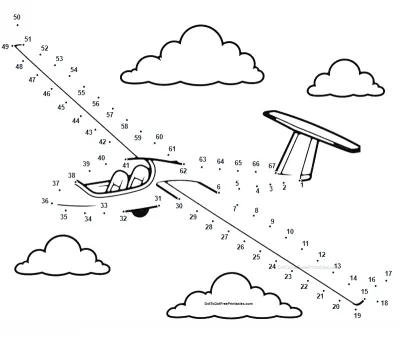
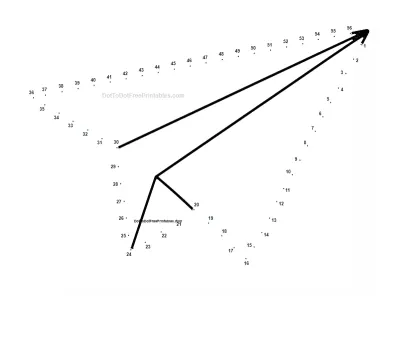
Connect 67 dots to reveal a graceful glider soaring silently on the wind. This easy, beginner-friendly printable helps children practise number sequencing, concentration, and steady pencil control.
Difficulty
Easy
Fun fact: Many gliders have no engine at all—they use rising currents of warm air, called thermals, to stay aloft for hours at a time.
Downloaded2+timesYou’ve made a great choice!
Downloads now start from the button below. Tap it to get this puzzle's PDF.
Number Version
Connect the numbered dots from 1 to the end to reveal the picture.
Free for home and classroom use.
Alphabet Version
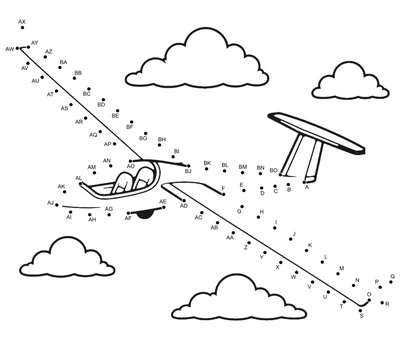
Includes alphabet-themed design for easy learning.
No sign-up needed. Opens as a PDF. Print on US Letter (8.5 × 11 inch) or A4 paper. Free for home and classroom use.
Planes
You might also like
Ages 5–7 — Easy
How to Solve the Glider Dot-to-Dot Puzzle
This quiet glider is riding the wind high above the clouds! The 67-dot challenge is divided into five easy stages, perfect for young puzzlers. Find dot 1 and catch the breeze!
1–14 — The Nose and Cockpit
Connect dots 1 through 14 to draw the smooth, narrow nose and cockpit up front.
Fun fact!
The pilot sits in a snug cockpit with a clear canopy, giving a wide view of the sky in every direction.
The pilot sits in a snug cockpit with a clear canopy, giving a wide view of the sky in every direction.
15–28 — The Long, Slender Wings
Continue from dot 15 to dot 28 to shape the glider's long, slim wings.
Fun fact!
A glider's wings are much longer and thinner than an airplane's, which helps it catch rising air and fly farther without an engine.
A glider's wings are much longer and thinner than an airplane's, which helps it catch rising air and fly farther without an engine.
29–42 — The Slim Fuselage
Follow dots 29 through 42 along the slender body connecting the wings to the tail.
Fun fact!
Gliders are built as light and streamlined as possible, since every bit of extra weight makes it harder to stay in the air.
Gliders are built as light and streamlined as possible, since every bit of extra weight makes it harder to stay in the air.
43–55 — The Tail Fin
Trace dots 43 through 55 to add the tall tail fin at the back of the glider.
Fun fact!
The tail fin keeps the glider flying straight and steady as it rides the wind currents.
The tail fin keeps the glider flying straight and steady as it rides the wind currents.
56–67 — The Wingtips and Finish
Finish with dots 56 through 67 to complete the curved wingtips and rear details of the glider.
Fun fact!
Many gliders are pulled into the sky by another airplane or a winch, then they let go and glide on their own.
Many gliders are pulled into the sky by another airplane or a winch, then they let go and glide on their own.
Fantastic soaring—your glider is riding the wind beautifully! Colour it in sky blues and whites, then add some fluffy clouds around it. Explore more planes dot to dot printables to keep the fun going.
Coloring Guide
Glider: Classic Real-Life Colors
Gliders are painted glossy white to protect their long wings from the sun, with a little sky blue on the canopy and tail, just like this palette.
| Dot Range | Part | Color | Why this color | |
|---|---|---|---|---|
| Numeric | Alphabet | |||
| 1–14 | A–N | The Nose and Cockpit | Crayola Sky Blue | The clear cockpit canopy on the smooth nose mirrors the sky all around the pilot, so a pale blue fits this part. |
| 15–28 | O–AB | The Long, Slender Wings | Crayola White | Real gliders are almost always painted glossy white so the sun does not heat and weaken their long, thin wings. |
| 29–42 | AC–AP | The Slim Fuselage | Crayola White | The narrow body is kept white too, part of the smooth, light finish that helps the glider slip through the air without an engine. |
| 43–55 | AQ–BC | The Tail Fin | Crayola Sky Blue | A pale blue on the tall tail fin ties it to the sky it slices through as it keeps the glider pointed straight. |
| 56–67 | BD–BO | The Wingtips and Finish | Crayola White | The gently curved wingtips are the far ends of those white wings, finished in the same smooth paint. |
Glider: Soft Natural Colors
Seen soaring in strong sunlight, a white glider fades to soft greys and pale lavender-blue, which is what this palette shows.
| Dot Range | Part | Color | Why this color | |
|---|---|---|---|---|
| Numeric | Alphabet | |||
| 1–14 | A–N | The Nose and Cockpit | Crayola Periwinkle | High up in bright light the canopy over the nose glows a soft lavender-blue as it reflects the pale sky. |
| 15–28 | O–AB | The Long, Slender Wings | Crayola Timberwolf | Strong sun on the long white wings flattens them to a gentle grey, especially underneath as the glider banks. |
| 29–42 | AC–AP | The Slim Fuselage | Crayola Timberwolf | Daylight bouncing off the slim body gives it a soft pale grey sheen along its whole streamlined length. |
| 43–55 | AQ–BC | The Tail Fin | Crayola Periwinkle | In full sun the tall tail fin fades to a hazy periwinkle against the bright blue behind it. |
| 56–67 | BD–BO | The Wingtips and Finish | Crayola Timberwolf | The curved wingtips catch the same washed-out grey light as the rest of the sunlit wing. |
Glider: Bold Real-Life Colors
These bolder greys and blues stand for bare composite wings and the bright club trim real gliders use to stay visible aloft.
| Dot Range | Part | Color | Why this color | |
|---|---|---|---|---|
| Numeric | Alphabet | |||
| 1–14 | A–N | The Nose and Cockpit | Crayola Cerulean | A deep cerulean on the nose and canopy makes the front of the glider pop against a pale, cloudy sky. |
| 15–28 | O–AB | The Long, Slender Wings | Crayola Gray | A solid grey shows the long wings as sleek and purposeful, like the bare composite some gliders leave unpainted. |
| 29–42 | AC–AP | The Slim Fuselage | Crayola Gray | Strong grey on the slim body highlights just how thin and streamlined a glider has to be to stay up without power. |
| 43–55 | AQ–BC | The Tail Fin | Crayola Cerulean | Bold cerulean on the tall tail fin echoes the bright trim real glider clubs paint on to spot their aircraft in the air. |
| 56–67 | BD–BO | The Wingtips and Finish | Crayola Gray | Darker grey at the curved wingtips draws the eye to the very ends of the long wings that catch the rising air. |
Why Is the Glider Dot to Dot Printable Rated Easy?
The Glider is rated easy. Of its 67 dots, 53 run in straight lines, with 4 curved, 4 zigzag and 6 sharp-turn dots. The stretch to slow down for is long, slender wings at dots 18–19. Follow the numbered order even when another dot looks nearer, and check the next number before each curve.
Straight
53 dots · 79%
Easiest — join two dots with one straight pencil stroke.
Curved
4 dots · 6%
18 19
Zigzag
4 dots · 6%
Quick in-and-out changes of direction. Good counting practice.
Sharp turns
6 dots · 9%
The hardest bits — tight corners where the line doubles back.
We traced all 67 dots on this exact worksheet by hand to write this — not a generic guess.
Key Sections to Know
Every notable stretch of the path, dot by dot.
| Dot Range | Pattern | Why It Matters | |
|---|---|---|---|
| Numeric | Alphabet | ||
| 18 19 | R S | Curved | The outline swings around long, slender wings here; take dots 18 to 19 in short strokes. |
Bottom line: The Glider dot to dot is easy rated — 85% smooth lines with no tricky spots to watch for.