8 puzzles
Dinosaur Dot to Dot Printable Worksheets for Kids
T-Rex, Triceratops, and more prehistoric friends — free dinosaur dot to dot printables to connect and color.
Everything You Need to Know About Dinosaur Dot to Dot Printables
Eight Prehistoric Puzzles to Connect and Color
This dinosaur dot to dot collection includes eight puzzles built around free printable worksheets: T-Rex, Ostrich, Brontosaurus, Triceratops, Velociraptor, Stegosaurus, Spinosaurus, and Pterodactyl. Each one follows numbered dots from 50 up to 74, so a child moves through a full prehistoric line-up rather than just one dinosaur.
Every printable is free to download as a PDF and works the same way: connect the dots in order, watch the dinosaur appear, then color it in. Because the puzzles range from a 50-dot Brontosaurus to a 74-dot Spinosaurus, this connect the dots set suits children from early kindergarten through second or third grade.
The collection also includes a pterosaur, a flying reptile outside the dinosaur group (the Pterodactyl), and an ostrich, a living bird and a modern member of the dinosaur family tree. Both still belong here because they share the same prehistoric-world appeal that makes a dinosaur dot to dot page fun to browse.
Meet the Dinosaurs in This Collection
The eight puzzles split naturally into hunters, plant-eaters, and a couple of flying or non-dinosaur neighbors, based on what each puzzle's own facts describe.
The Hunters: T-Rex, Velociraptor, and Spinosaurus
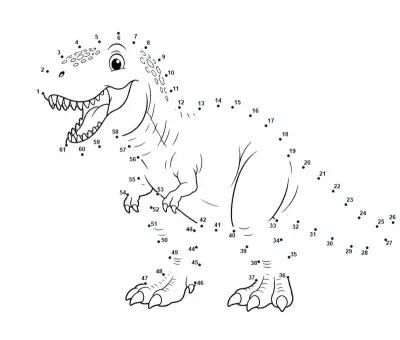
T-Rex is the 61-dot centerpiece of the meat-eating trio. Its puzzle explains that T-Rex kept replacing broken or worn teeth throughout its life, which is a detail kids enjoy pointing out while coloring in that famous jaw.
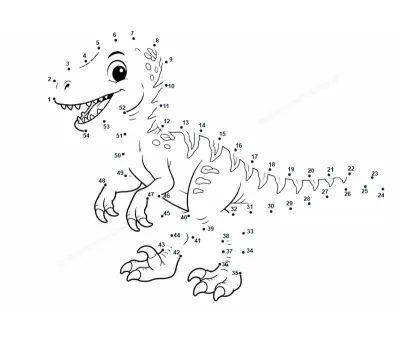
Velociraptor, at 54 dots, is the puzzle most likely to surprise a child who has only seen the movie version. The real animal was feathered and roughly the size of a turkey, and its name actually means "swift thief" — a nod to the burst of speed one modeling study suggested the real Velociraptor may have reached.
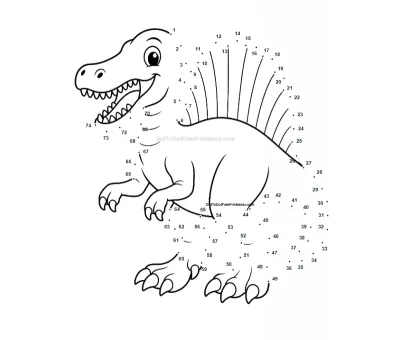
Spinosaurus is the longest and largest predator here at 74 dots. Its own puzzle notes that it could grow to nearly 59 feet — longer than a school bus, and longer than T-Rex itself — with a tall sail running down its back.
The Plant-Eaters: Brontosaurus, Triceratops, and Stegosaurus
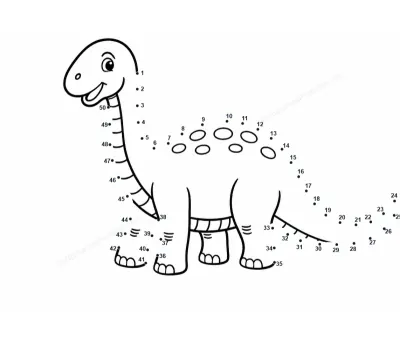
Brontosaurus opens the collection at just 50 dots, making it one of the easier connect the dots dinosaurs on the page. Its name means "thunder lizard," a nod to its enormous size rather than anything fierce about its diet.
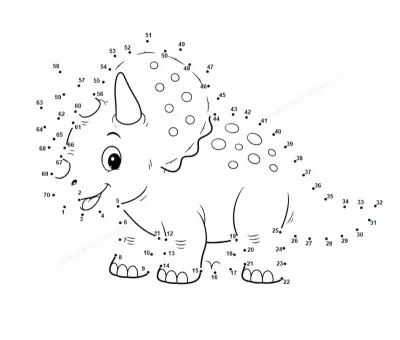
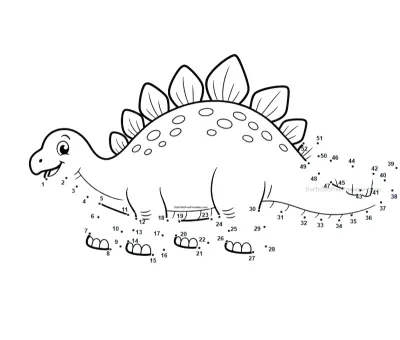
Triceratops is a 70-dot puzzle built around its three facial horns, which the worksheet notes could grow up to 3 feet long — about the length of a baseball bat. Stegosaurus sits at 52 dots and centers on a brain the size of a walnut paired with a spiked tail the puzzle calls its real superpower.
Flying and Non-Dinosaur Neighbors: Pterodactyl and Ostrich
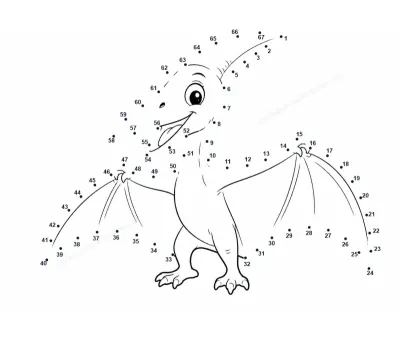
Pterodactyl, at 67 dots, is a useful puzzle for correcting a common mix-up: its own page points out that Pterodactyls were not technically dinosaurs at all, but flying reptiles known as pterosaurs that lived alongside them.
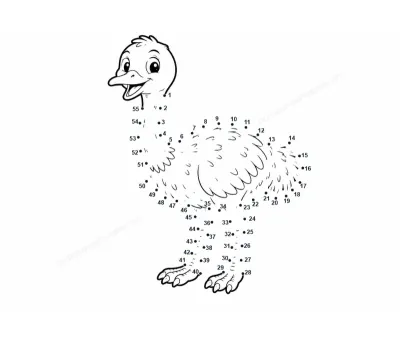
Ostrich rounds out the collection at 55 dots. It is not a dinosaur puzzle in the strict sense either, but the worksheet frames it as a living relative of the dinosaurs and highlights a genuinely wild fact: ostriches can run up to 45 miles per hour, making them the fastest running birds on Earth.
Picking a Dot Count for Your Child
Across the eight worksheets, dot counts run from 50 (Brontosaurus) up through 52 (Stegosaurus), 54 (Velociraptor), 55 (Ostrich), 61 (T-Rex), 67 (Pterodactyl), 70 (Triceratops), and 74 (Spinosaurus). That spread makes it easy to match a puzzle to how far a child can comfortably count.
A dot to dot for 5 year olds who are just past their first number sequences usually goes better with the 50-dot Brontosaurus or 54-dot Velociraptor. Children who count confidently into the 60s and 70s are better matched to the T-Rex, Pterodactyl, Triceratops, or Spinosaurus pages, which also carry a step-by-step dot guide breaking each long trail into shorter, named sections.
Coloring Tips Based on Each Dinosaur's Real Features
Once the dots are connected, each puzzle's own described features give a natural starting point for coloring. Triceratops has three horns and a wide bony frill worth picking out in a contrasting shade from the rest of the body. Stegosaurus is built around its row of diamond-shaped back plates and spiked tail, so those plates are the obvious focal point for a bolder color.
Spinosaurus is defined by its tall back sail, which stands out best when colored differently from the body underneath it. T-Rex's puzzle draws attention to its tiny arms next to its huge jaw, a fun contrast to color separately, while Velociraptor's feathers give a reason to try short, feather-like color strokes instead of one flat fill.
Pterodactyl's long beak and wide wings are its two clearest shapes to color, and Ostrich's puzzle calls out its long neck and powerful running legs as the parts that make the bird instantly recognizable once colored in.
How to Use These Free Printable Dinosaur Worksheets
Pick a dinosaur, check that its dot count matches what your child can count comfortably, and print the free PDF. Start at dot 1 and connect each number to the next in order until the full picture appears, then bring out the crayons or colored pencils.
These printable dinosaur worksheets work well at home for a quiet activity or in a classroom during a prehistoric-life unit, since a teacher can hand the shorter Brontosaurus to one child and the longer Spinosaurus to another during the same lesson. Every puzzle page also includes its own dot-by-dot guide and color-scheme suggestions grounded in how each dinosaur is actually described, so the coloring stage stays connected to what a child just learned while counting.
Common questions
Frequently asked questions
What free dinosaur dot-to-dot printables for kids are available here?
This dinosaur collection includes 8 free connect-the-dots worksheets featuring Brontosaurus, Stegosaurus, Velociraptor, Ostrich, T-Rex, Pterodactyl, Triceratops, and Spinosaurus. The collection includes both shorter number sequences for younger kids and longer dinosaur challenges for children who are ready to count beyond 60.
Which dinosaur connect the dots worksheets are easiest for younger kids?
Some of the shortest dinosaur puzzles are Brontosaurus with 50 dots, Stegosaurus with 52 dots, and Velociraptor with 54 dots. The Brontosaurus and Velociraptor are both listed for ages 5–7, giving younger dinosaur fans a couple of beginner-friendly choices.
Are there dinosaur dot-to-dot 1–50 printables?
The 50-dot Brontosaurus is the only puzzle in this collection that stays within the 1–50 range — every other dinosaur worksheet here runs from 52 dots up. It's the best starting point for children who are still building confidence with shorter number sequences.
What is the easiest dinosaur dot-to-dot puzzle on this page?
The Brontosaurus has the lowest dot count in the current dinosaur collection, with 50 numbered dots. It is listed for ages 5–7 and lets children reveal the long-necked "Friendly Thunder Lizard" while following a relatively short number sequence.
Is there a T-Rex dot-to-dot printable for kids?
Yes. The T-Rex 61-Dot Challenge contains 61 numbered dots and is listed for ages 5–7. It provides a longer dinosaur activity than the 50-dot Brontosaurus or 52-dot Stegosaurus and is a strong choice for children who specifically enjoy Tyrannosaurus rex.
Is there a Brontosaurus connect the dots worksheet?
Yes. The Brontosaurus puzzle contains 50 numbered dots and is listed for ages 5–7. It is the simplest dinosaur worksheet on the page and reveals the long-necked "Friendly Thunder Lizard" as children connect numbers from 1 through 50.
Do you have a Stegosaurus dot-to-dot printable?
Yes. The Stegosaurus worksheet contains 52 numbered dots and is designed for ages 6–9 — its plated back and spiked tail make it a trickier shape to trace than its dot count alone suggests, even though it's one of the shorter puzzles here. Connecting the sequence reveals the dinosaur's distinctive diamond-shaped back plates and spiked tail.
Is there a Triceratops connect the dots printable?
Yes. The Triceratops puzzle contains 70 numbered dots and is listed for ages 5–8. Children follow the numbered sequence to reveal its three facial horns and large bony frill, giving them a more detailed challenge than the 50- and 52-dot dinosaur puzzles.
Is there a Pterodactyl dot-to-dot worksheet for kids?
Yes. The Pterodactyl puzzle contains 67 numbered dots and is listed for ages 5–7. Children connect the dots to reveal its long beak and wide wings. The page also explains that Pterodactyls were actually flying reptiles rather than true dinosaurs.
Which dinosaur dot-to-dot puzzles have around 50 to 70 dots?
Several puzzles fall into this useful middle range. Brontosaurus has 50 dots, Stegosaurus has 52, Velociraptor has 54, Ostrich has 55, T-Rex has 61, Pterodactyl has 67, and Triceratops has 70. Spinosaurus, at 74 dots, is the longest challenge in the collection. These provide a gradual progression for children moving beyond the shortest dinosaur worksheets.
Are there dinosaur connect the dots worksheets for ages 5–7?
Yes. The Brontosaurus (50 dots), Velociraptor (54 dots), Ostrich (55 dots), T-Rex (61 dots), and Pterodactyl (67 dots) are all listed for ages 5–7 — five familiar dinosaurs and prehistoric creatures for younger children to choose from.
Which dinosaur dot-to-dot worksheets are suitable for ages 6–9?
The 52-dot Stegosaurus is listed for ages 6–9 — its distinctive plates and spiked tail make it the trickiest shape to trace in the collection, even though it isn't the highest dot count. Children who enjoy that extra challenge can also try the 70-dot Triceratops or 74-dot Spinosaurus, both listed for ages 5–8.
What is a good dinosaur dot-to-dot puzzle after completing a 1–50 worksheet?
After completing the 50-dot Brontosaurus, children can move to the 54-dot Velociraptor. From there, the 61-dot T-Rex and 67-dot Pterodactyl provide a natural progression toward the 70-dot Triceratops and the 74-dot Spinosaurus.
Are these dinosaur dot-to-dot worksheets also coloring pages?
Yes. After connecting the numbered dots, children can color the dinosaur picture they have revealed. For example, they can finish the 52-dot Stegosaurus and color its back plates, complete the 70-dot Triceratops and color its horns and frill, or finish the 61-dot T-Rex before adding their own dinosaur colors.
How can I choose the right dinosaur dot-to-dot puzzle for my child?
Choose according to the number range your child can comfortably follow, not just the dot count — a shorter puzzle like the 52-dot Stegosaurus can still be trickier to trace than a longer one. Beginners can start with the 50-dot Brontosaurus. Children ready for a bit more can try the 54-dot Velociraptor or 55-dot Ostrich. More confident kids can progress to the 61-dot T-Rex, 67-dot Pterodactyl, 70-dot Triceratops, or the 74-dot Spinosaurus.